In the complex and highly regulated world of pharmaceutical distribution, ensuring the integrity of the supply chain is paramount. Every link, from the initial sourcing of medicinal products to their final delivery, must be robust, reliable, and compliant with stringent Good Distribution Practice (GDP) standards. At the heart of this integrity lies the critical process of qualifying both suppliers and customers.
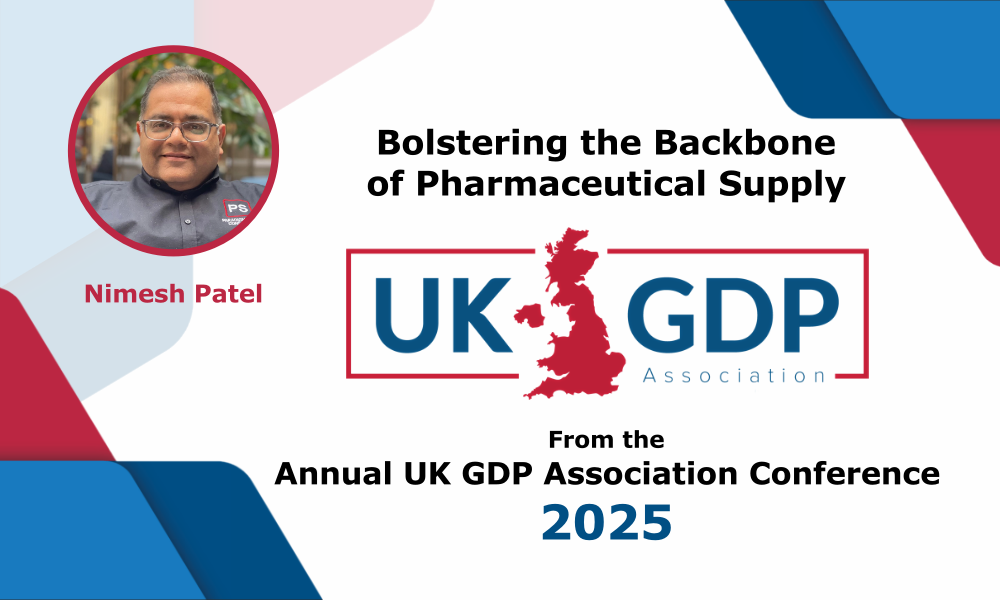
Recognising the vital importance of this topic, the UK GDP Association is delighted to announce that Nimesh Patel of Paradigm Shift Consulting will be a key speaker at the UK GDP Association Conference 2025. Join us in Northampton on the 17th and 18th June 2025 for this essential event.
Nimesh is a highly respected figure in the pharmaceutical sector, bringing over 15 years of industry experience, including more than a decade dedicated to the pivotal role of Responsible Person (RP). His background as a Fellow Chartered Certified Accountant (FCCA) further equips him with a unique perspective on operational efficiency, financial accountability, and risk management within a GDP-compliant framework.
This blend of quality assurance, regulatory knowledge, and business acumen makes him exceptionally qualified to speak on the foundational elements of supply chain integrity.
His session at the conference, titled "Ensuring Supply Chain Integrity: The Critical Role of Supplier and Customer Qualification in UK GDP", promises to be an essential exploration of a topic that directly impacts the daily operations and regulatory standing of every UK pharmaceutical wholesaler and distributor.
In today's globalised and increasingly complex pharmaceutical market, the risks within the supply chain are multifaceted. Counterfeit and falsified medicines continue to pose a significant threat to patient safety, while supply disruptions, quality deviations, and regulatory non-compliance can have severe consequences for businesses.
For UK wholesalers and distributors operating under the watchful eye of the MHRA, robust supplier and customer qualification processes are not merely administrative tasks; they are fundamental safeguards. They provide the necessary assurance that:
- Products are sourced from legitimate, authorised entities operating under appropriate quality standards (like GMP or GDP).
- Products are supplied only to authorised entities capable of maintaining GDP standards downstream, preventing diversion into illegal channels or inappropriate handling.
- The risk of receiving or distributing substandard or falsified products is minimised.
- Traceability is maintained throughout the chain, enabling effective recalls if necessary.
Navigating current challenges, such as post-Brexit trading relationships, managing diverse product portfolios including temperature-sensitive biologics, and adapting to new distribution models, all hinge on the reliability of your trading partners. If your suppliers or customers are not adequately qualified, the integrity of your entire operation is compromised, regardless of how strong your internal processes may be.
The importance of rigorous supplier and customer qualification is firmly rooted in international and national GDP guidelines. The MHRA place significant emphasis on these processes as cornerstones of a robust quality management system.
- Wholesalers should ensure that they only supply medicinal products to persons or entities that are themselves authorised to receive medicinal products (e.g., holders of a WDA(H), pharmacies).
- Verification of the legitimacy and authorisation of the customer is required before any supply takes place.
The MHRA, in its role as the UK's regulatory authority, upholds these principles within the UK's GDP framework. Their inspections focus heavily on the effectiveness of a company's Quality Management System (QMS), including the procedures for qualifying and managing suppliers and customers.
The MHRA expects companies to demonstrate robust due diligence processes proportional to the risk associated with the supplier or customer and the products being handled. Failure to adequately qualify trading partners can lead to significant deficiencies being raised during inspections, potentially impacting a company's wholesale distribution authorisation (WDA(H)).
Staying informed via the official MHRA website's guidance on GDP, such as the Medicines: good manufacturing practice and good distribution practice page on GOV.UK, is crucial for understanding current regulatory expectations around supply chain security and partner qualification. The MHRA Inspectorate blog also frequently provides valuable insights into common inspection findings and areas of focus, including those related to supplier and customer qualification.
Based on regulatory expectations and best practices, Nimesh Patel's session will likely delve into practical strategies for enhancing your qualification processes. These could include:
- Risk-Based Approach: Implementing a system where the level of qualification effort (e.g., documentation review, questionnaires, audits) is proportionate to the risk posed by the supplier, customer, product type, and volume.
- Documented Procedures: Establishing clear, written Standard Operating Procedures (SOPs) for all qualification activities, covering initial assessment, approval, ongoing monitoring, and re-qualification.
- Supplier Auditing: Developing and executing an audit programme for key suppliers to verify their compliance with relevant quality standards and assess their reliability.
- Customer Verification: Implementing robust, documented processes for verifying the legitimacy and authorisation status of all customers before dispatching medicinal products. This includes checking licences and ensuring they are entitled to receive the specific product types.
- Continuous Monitoring: Establishing systems for ongoing review and monitoring of supplier and customer performance, including handling of complaints, returns, and any changes in their regulatory status.
- Training: Ensuring all personnel involved in procurement, sales, and quality assurance are thoroughly trained on the qualification procedures and their role in preventing falsified medicines and maintaining supply chain integrity.
These steps, when integrated into a comprehensive QMS, provide a strong defence against potential compromises to supply chain integrity.
Nimesh Patel's session will offer attendees a deep dive into these critical areas. Drawing from his extensive experience as an RP navigating real-world distribution challenges and regulatory expectations, he will provide practical insights into:
- Designing and implementing effective, risk-proportionate qualification processes that satisfy regulatory requirements.
- Understanding and meeting MHRA expectations for due diligence in supplier and customer management.
- Leveraging quality risk management principles to identify and mitigate risks associated with trading partners.
- Developing robust procedures for verifying customer authorisations and preventing illegal diversions.
- Integrating qualification processes seamlessly into your overall QMS for continuous compliance and improvement.
There are discounted tickets available for UK GDP Association members, members can save £100 when attending both conference days. However, our commitment to low-cost, high-value educational content means that conference tickets will still be the best value whether you chose to join as members or not.
Membership is only £29 +VAT per individual, per year and offers reduced costs on consulting, training and conference tickets. If you buy tickets for both conference days, there is an even greater discount. Costs for non-members is just £224.50 per day, a fraction of the cost of other industry events!
In addition, on the evening of Tuesday 16th June, we will be hosting an evening event of dinner, networking, and even some of Dave’s infamous karaoke, for just £49 +VAT per person. This is a fundraising dinner in aid of the MVA Society.
Please see here for more information on the conference and to book your conference and evening dinner tickets.
We are very much looking forward to seeing you all at the conference!
 2025 Conferences