Transport by Air
The global supply chain is vast, complex, and heavily relied on to ensure the movement and supply of pharmaceutical products.
In 2022, the UK imported £30.8 billion worth of medicinal product and exported over £25.4 billion.
How do we ensure that these products are distributed while following the best GDP practices and maintaining product integrity across continents, cultures, and climates?
The answer to this question lies in knowledge. To ensure best practice, we need to understand how the supply chain works and the role of the distribution partners involved along the way. Different modes of transport bring different challenges, and only by understanding the process and the challenges can we truly mitigate risk to products and ultimately improve patient safety.
In this blog, we will examine Air Cargo transportation.
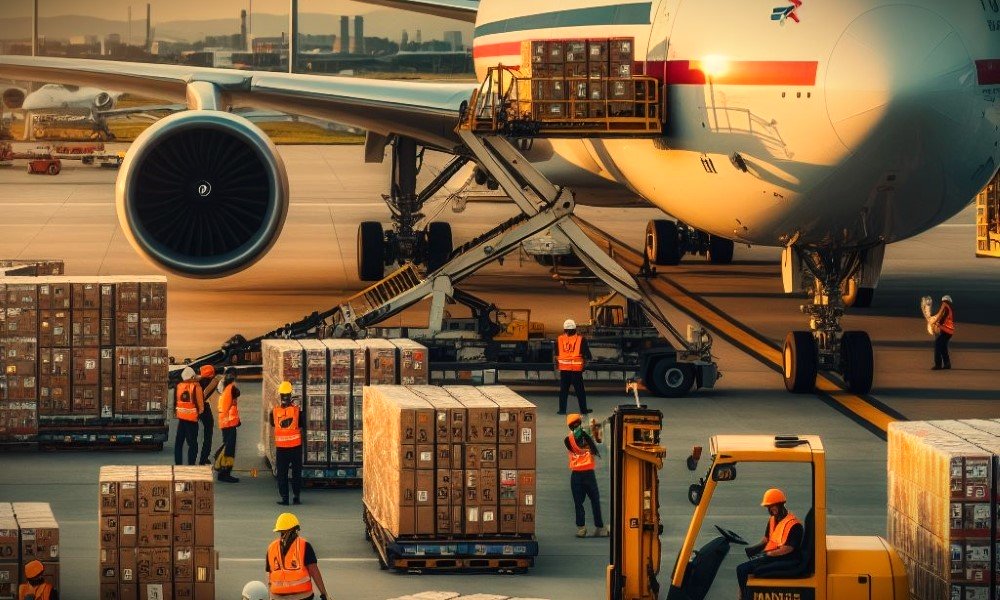
Air is the most complex mode of transport in every way and thus carries the highest risk. Air cargo passes through the most subcontractors, has the most touchpoints, and is subjected to the highest levels of handling.
Air cargo is also heavily regulated, and pharmaceutical products aren’t exempt just because of their nature; they are still subjected to inspection processes, aircraft loading, paperwork requirements, and any failures along the way can result in detrimental conditions that can impact a pharmaceutical product.
The above example is for a straightforward direct 2-25°C flight.
Once you add ‘indirect’ flights to the mix, you can expect to repeat the unloading/loading and GHA storage steps numerous times, thus increasing the risk level each time. Have a think about each of the above steps, can you map the risks and mitigations for each one? What is your level of understanding around the temperature capabilities at different points in the air supply chain?
From the steps above, we can see the subcontracting pattern of:
- The shipper subcontracts a freight forwarder.
- The freight forwarder subcontracts the air carrier.
- The air carrier subcontracts the GHA.
Each carrier and their GHA have differing capabilities globally in terms of temperature, quality management and security.
Mitigating the Route
No two lanes are the same and no air supply chain can be constantly temperature-controlled unless active/passive temperature management containers are used. Most carriers do offer ‘pharmaceutical carrier services’ such as ‘15-25°’ and ‘2-8°C’, however using these services doesn’t mean your pharma cargo will be controlled end to end – it will be controlled where possible and where temperature-controlled storage facilities are available. Remember, aircraft will always be loaded and unloaded outside, sometimes on boiling hot tarmac, or in the depths of winter, so this stage of the supply chain will never be controlled. Mitigating actions MUST be considered.
Each step of the air cargo process carries numerous risks, and these can be assessed and mitigated, using route risk assessments as the methodology to identify such risks. A thorough understanding of the supply chain, global capabilities and complexities is required to ensure patient safety when distributing pharmaceuticals globally.
Further Assistance
If we can help further your understanding, we have the expertise and we’re here to help. Get in touch with us via the contact form available at the bottom right of this screen. (Remember to include your name and email address).
Alternatively you can email us on info@ukgdpassociation.co.uk or call us on 0330 133 0920 for a free intitial consultation by phone.
Useful links
Route Risk Assessment (UK GDP Blog)
Transport of Medicines in GDP (UK GDP Blog)
MHRA (Exports and Customs Procedures)
 Guidance